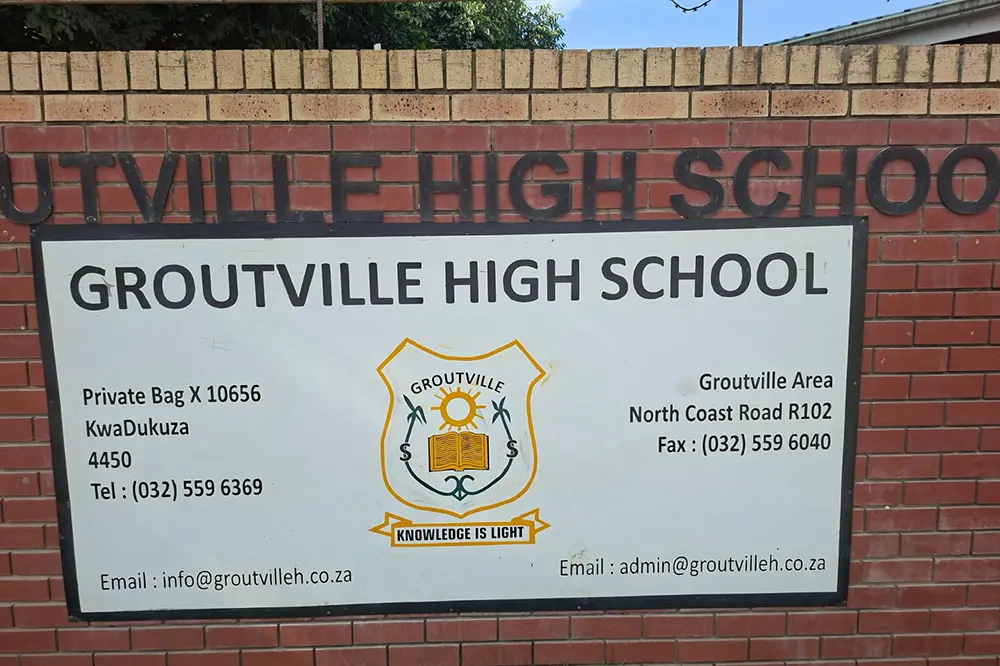
Welcome
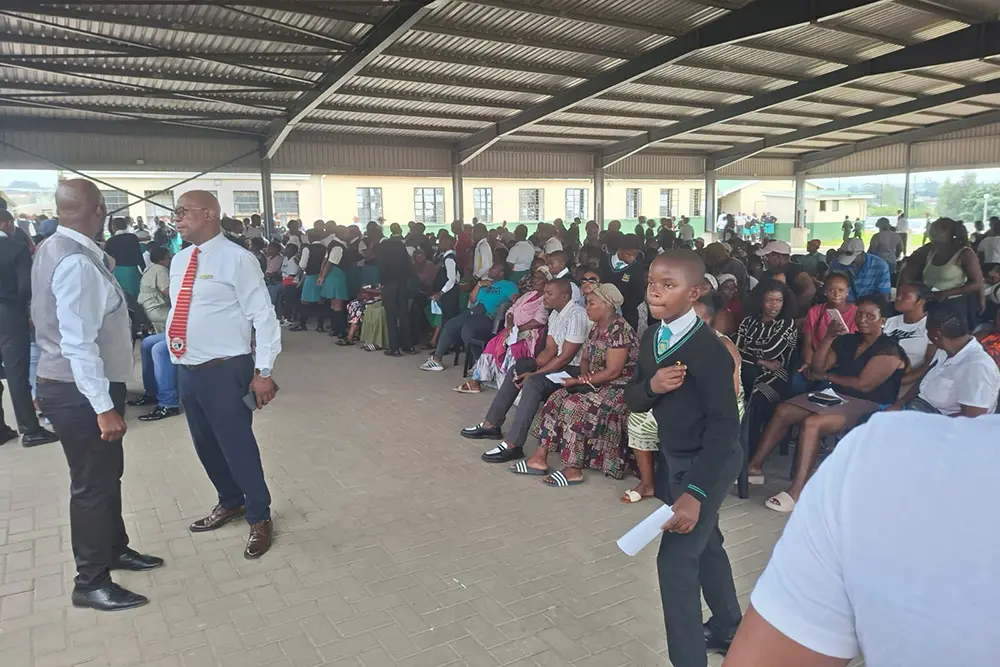
Parent Interviews
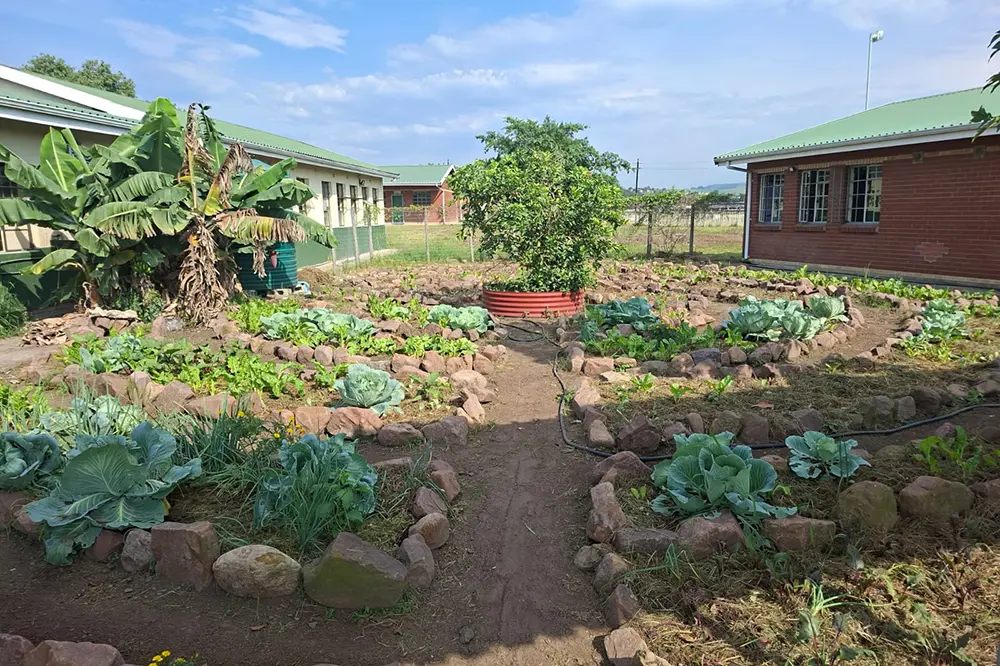
Horticulture Project
Groutville – A Rich History
Founded in 1844 as a mission settlement by Reverend Aldin Grout, Groutville developed around education, religion, and agriculture and later became closely associated with political and intellectual leadership, most notably through Albert Luthuli. Today, Groutville is recognised as a heritage-rich peri-urban community within the iLembe District, symbolising civic responsibility and social justice.
By 2026, the school has grown into one of the largest public secondary schools in its district, serving over 2 700 learners and achieving consistently high matric pass rates. It stands as a symbol of continuity of it Groutville’s missionary origins, strong Christian ethos, commitment to African learners, and its contemporary aspirations for social and economic advancement.
Education Reframing
Groutville High School (GHS) leadership is acutely aware that free or low-cost public basic education is the only hope for 80% of learners and, for 70%, the qualification they get on leaving may be their last – isn’t just failing—it’s irrelevant. That, by prevailing standards the results they achieve are celebrated, outcomes are catastrophic: massive dropouts, no vocational pathways, zero alignment with employment opportunities , and often a ticket to nowhere, while fuelling despair, crime, and inequality – by any measure a “painfully clear” systemic failure.
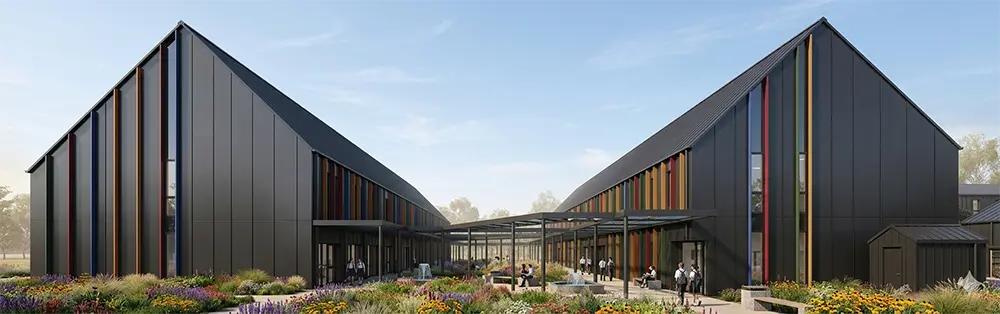
In response GHS has elected to add a QCTO/ NQF-2 to 4 Technical Campus to compliment their well established academic capability. The goal is a direct practical route to jobs, self employment, or paths to further TVET education. The initial feasibility is on Automotive, Wellness, Construction, Early Childhood Development, and Hospitality sectors – all are in high demand regional growth sectors and are AI resilient.
A Service Level Agreement (SLA) and School Governing Body (SGB) resolution, ratified reframing strategy and development plan commits Groutville High School and Lodestone Edsupport as the Collaboration School innovation pilot. In this regard a professional team has been established to drive the process from concept to design, development, and full operation.
Current status is:
- Preliminary environmental assessment has shown no critical constraints but the need for a full EIA.
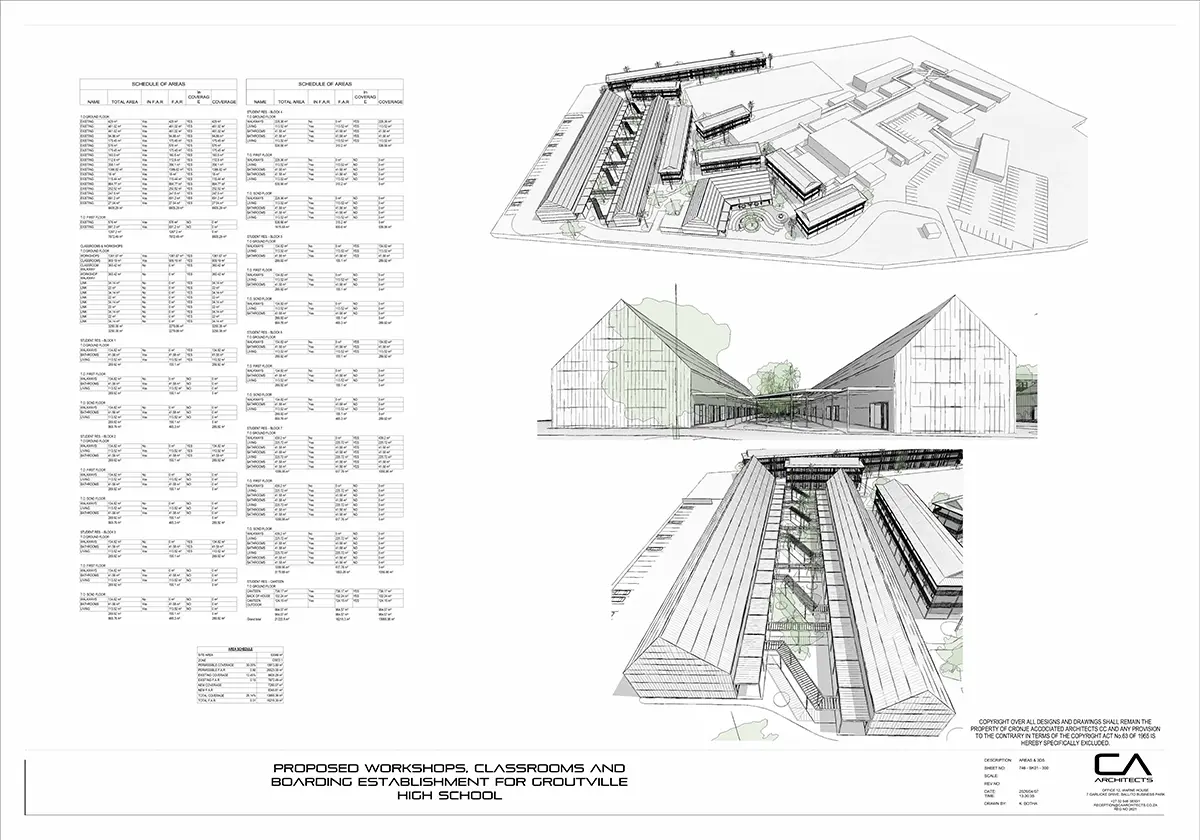
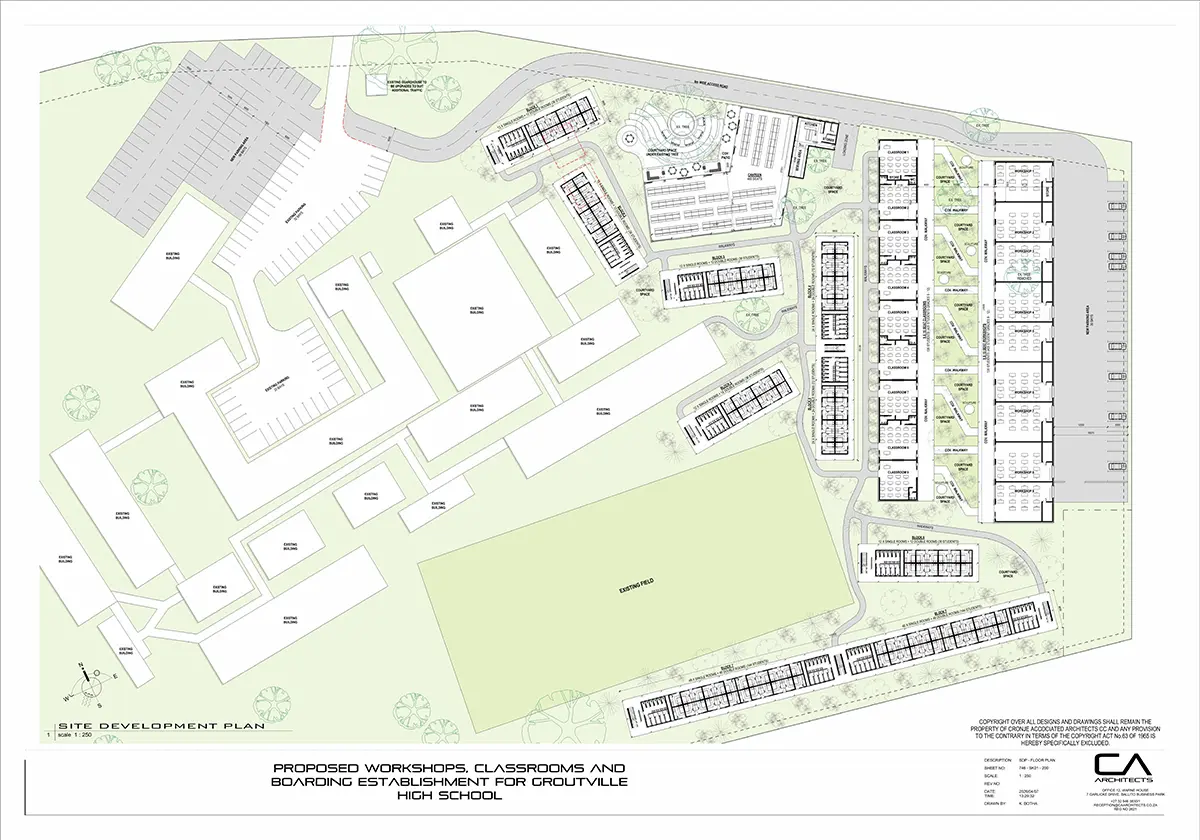
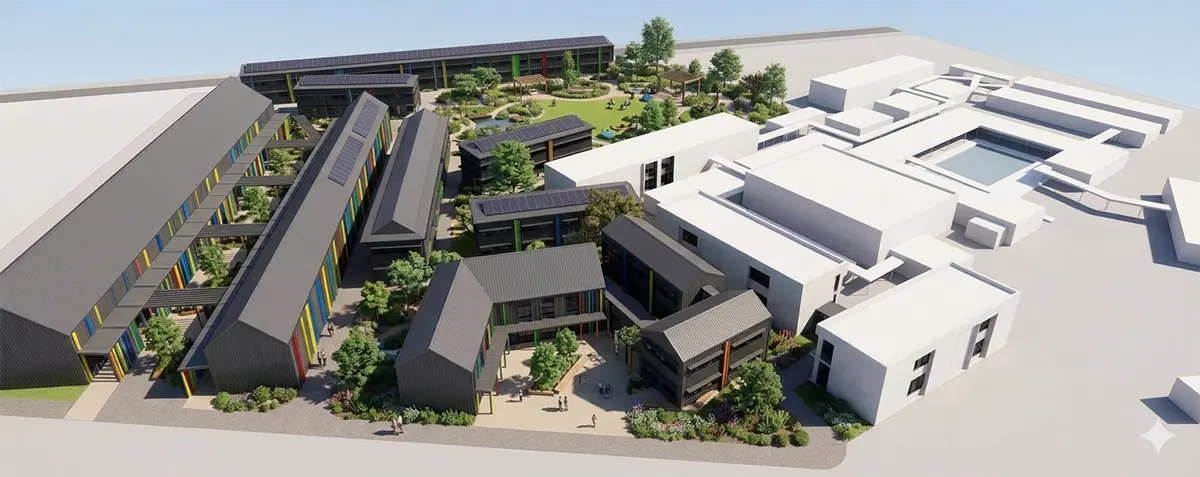
- The design parameters (i.e., 6 workshops, 8 classrooms, 2 studio’s, and dormitory accommodation for 400 learners are considered as feasible and conceptual architectural design is complete.
- Curriculum feasibility, QCTO requirements, workshop operational obligations have been considered and detailed planning can commence.
- A detailed Technical and Vocational Campus Development Plan and Budget has been SGB approved.